
Chief Director’s Auxiliary Policy Resources
The Coast Guard Auxiliary is the uniformed volunteer force of the United States Coast Guard. This office, the Office of Auxiliary and Boating Safety, runs the Auxiliary on the Coast Guard’s behalf and leads the national effort to make recreational boating safer. It is known by the office symbol CG-BSX, and its staff work at Coast Guard Headquarters in Washington, D.C.
The Office of Auxiliary and Boating Safety (CG-BSX) is the United States Coast Guard (USCG) headquarters office responsible for the Coast Guard Auxiliary and for the National Recreational Boating Safety (RBS) Program. It is located at Coast Guard Headquarters in Washington, D.C.
The office is split in two: the Office of Auxiliary (CG-BSX-1), which is responsible for the Auxiliary itself, and the Office of Boating Safety (CG-BSX-2). Within CG-BSX-1 there are two branches, the Administration Branch (CG-BSX-11) and the Operations Branch (CG-BSX-12).
To Auxiliarists the office is known simply as the Office of the Chief Director of the Auxiliary (CHDIRAUX), and the officer in charge of it holds the title Chief Director of Auxiliary. Several appointed Auxiliary Executive Assistants (EAs) support the Chief Director day to day.
Who holds each post, which Executive Assistant covers which function, and where this office sits in the Coast Guard chain of command are all set out in the Organization section below.
CG-BSX
CG-BSX-1 Logo
- Office symbol
- CG-BSX
- Part of
- United States Coast Guard
- Headquarters
- Washington, D.C.
- Chief Director of Auxiliary
- CAPT Brent R. Schmadeke, USCG
- Deputy Chief Director of Auxiliary
- CDR Peter J. Fransson, USCG
- Administers
- United States Coast Guard Auxiliary, established by Congress in 1939
- CGAUX@uscg.mil
History of the Auxiliary and Its Administration
In 1939 Congress established a United States Coast Guard (USCG) Reserve, administered by the Commandant and made up of unpaid volunteer American citizens who owned motorboats or yachts. In 1941 Congress created a military Reserve and renamed the original volunteer body the Coast Guard Auxiliary. The Auxiliary has therefore been administered by the Commandant of the Coast Guard since the day it was created.
Its first statutory purpose, set out in what was then Title 14 of the United States Code, section 822, was to assist the Coast Guard in promoting safety and effecting rescues on and over the high seas and on navigable waters, in promoting efficiency in the operation of motorboats and yachts, in fostering a wider knowledge of and better compliance with the laws governing their operation, and in facilitating other Coast Guard operations. The memorandum that accompanied the Act of 30 September 1944 put it more plainly: the primary purpose was to teach the owners and operators of small craft to operate them safely, and the secondary purpose was to use Auxiliary craft and Auxiliary people, once trained, to carry out certain Coast Guard duties.
The Coast Guard Authorization Act of 1996, signed into law on 19 October 1996, was the first major legislation affecting the Auxiliary since its establishment in 1939. It widened the Auxiliary’s purpose to assisting the Coast Guard, as authorized by the Commandant, in performing any Coast Guard function, power, duty, role, mission or operation authorized by law, and it allowed the Commandant to call on the Auxiliary to assist other Federal agencies, States and local governments in areas beyond recreational boating safety. The same legislation gave the Auxiliary a statutory organizational structure and authorized the Commandant to delegate the management of the Auxiliary to its own elected and appointed leaders.
Where this office comes in: overall authority for administering the Auxiliary rests with the Commandant, under the direction of the Secretary of the Department of Homeland Security (DHS), and the Commandant delegates that authority to Coast Guard offices and officers. The CG-BSX is where that delegated authority sits day to day. Its Chief serves as Chief Director of the Auxiliary, and the office writes the policy the Auxiliary works to, sets the standards Auxiliarists must meet before they are assigned to duties, and speaks for the Auxiliary inside Coast Guard Headquarters.
The office symbol has changed as the Coast Guard has reorganized around it. The office was formerly designated CG-542, and was relabeled as part of the reorganization of the Deputy Commandant for Operations, recorded in All Auxiliary Message (ALAUX) 015 of 2012. The two offices immediately above it were retitled in the same period under ALAUX 019 of 2012: the Assistant Commandant for Marine Safety, Security and Stewardship became the Assistant Commandant for Prevention Policy, and the Director of Prevention Policy became the Director of Inspections and Compliance.
Organization
CG-BSX is led by the Chief Director of Auxiliary.
Office leadership
Surnames link to each person’s biography, in PDF form, on the Chief Director of Auxiliary site.
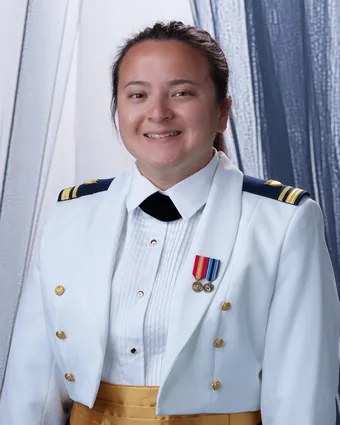
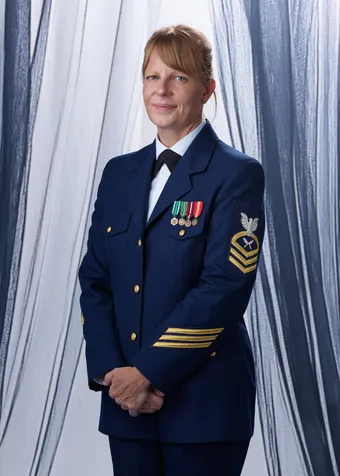
- Captain (CAPT) Brent R. Schmadeke, USCG — Chief Director of Auxiliary, and Chief, CG-BSX. The Chief Director is the Commandant’s designated representative to the Auxiliary and is responsible for the whole office. He is also the National Coordinator for the National RBS Program.
- Commander (CDR) Peter J. Fransson, USCG — Deputy Chief Director of Auxiliary, CG-BSX-1. CG-BSX-1 is the half of the office responsible for the Auxiliary itself, as distinct from CG-BSX-2. Fransson biography.
Captain Schmadeke’s biography
Before coming to this office, Captain Schmadeke served as Commanding Officer of USCG Air Station Port Angeles, in Port Angeles, Washington, leading a multi-mission air station supporting District 13 and Sector search-and-rescue, law-enforcement, and marine-environmental-protection readiness and response across a 3,500-square-nautical-mile area of responsibility that included hazardous micro-climates, mountainous terrain, the U.S.-Canada international border, Olympic National Park, marine sanctuaries, and nine tribal areas. He also provided aviation and facility engineering, finance, administrative, and medical support to ten Olympic Peninsula units comprising 350 personnel, the cutter Active, five 87-foot patrol boats, a Maritime Force Protection Unit forward operating base, and three remote small boat stations.
A native of Fredericksburg, Iowa, Captain Schmadeke graduated from Fredericksburg High School in 1993 and earned a Bachelor of Arts in Education from Wartburg College in Waverly, Iowa, in 1997. He taught elementary school in Phoenix, Arizona, and middle school in Byron and Aurora, Illinois, before entering Officer Candidate School in New London, Connecticut, in December 2001. He was commissioned in May 2002 and assigned to Coast Guard Headquarters in Washington, D.C.
After sixteen months in the Systems Resource Planning directorate, he was selected for flight training in Pensacola, Florida, earning his wings in 2005, and was assigned to fly the MH-65 at Air Station Port Angeles, where he was designated an Aircraft Commander. For his second flying tour, at Air Station Traverse City, Michigan, he earned Instructor Pilot and Flight Examiner qualifications and a Master of Science in Quality Systems Management from the National Graduate School in Falmouth, Massachusetts. He was then assigned to Aviation Training Center Mobile, Alabama, as an MH-65 Standardization Instructor Pilot and Flight Examiner, served as the H-65 Division Operations Officer, and instructed newly designated aviators in the MH-65D.
In 2016 he returned to Air Station Port Angeles as Operations Officer and the unit’s Chief Pilot, overseeing aviation response for the northwest Pacific Ocean, Puget Sound, and a 125-mile U.S.-Canada land and sea border, and managing a flight program of about 1,905 hours a year. In 2019 he served as the Coast Guard’s aviation liaison to the Department of Homeland Security, to Customs and Border Protection’s Air and Marine Operations, and to the FAA in Washington, D.C., helping develop department-wide aviation policy. In 2020 he served as Deputy of Aviation Forces at Coast Guard Headquarters, overseeing aviation resources, doctrine, and training in support of 29 air stations, 6 air facilities, and 5,700 personnel operating 211 aircraft.
Captain Schmadeke lives in Sequim, Washington.
Branch chiefs
- Mr. Stephen “Steve” J. Minutolo, USCG CDR (ret.) — Administration Branch Chief (CG-BSX-11). Minutolo biography.
- Master Chief Boatswain’s Mate (BMCM) Jason C. Hermes, USCG — Operations Branch Chief (CG-BSX-12). Hermes biography.
Administration Branch staff (CG-BSX-11)
The posts below are what the Administration Branch covers: training administration, Auxiliary administration, the security program, and the budget.
- Lieutenant (LT) Kelly M. Richters, USCG — Assistant Administration Branch Chief and Acting Training Manager. Richters biography.
- Training Program Manager (GS-13) — this post is vacant. LT Richters is covering it in an acting capacity until it is filled.
- Chief Yeoman (YNC) Elina M. Pereira, USCG — Auxiliary Administration Specialist. Pereira biography.
- Mr. Steven “Steve” R. Keel, USCG CDR (ret.) — Security Program Manager. Keel biography.
- Mr. Randall K. Ellington — Budget and Finance Manager. Ellington biography.
Chief Director of Auxiliary Executive Assistants
Executive Assistants (EAs) are Auxiliarists appointed to support the Chief Director’s Office in a specific subject area. The current EAs and the function each one covers are listed below.
- AUX Jennifer L. Stack — Auxiliary Training Program Administration
- AUX James C. Griffith — Auxiliary Aviation Training Program Administration
- Commodore (COMO) Byron Moe — Auxiliary Aviation Safety
- COMO David A. Elliot — Auxiliary Operations
- AUX Roy Savoca — Auxiliary Surface and Aviation Operations
- AUX Jennifer L. Austin — AUXDATA Operations Support
- COMO Jan R. Munroe — AUXDATA Administration
- AUX Susan Z. Hastings — AUXDATA Administration and Input
- AUX Terry D. Hickox — AUXDATA Database Support
- AUX Faron Petteys — Auxiliary Training Program Management
- AUX David E. Gaylord — AUXDATA Support
- COMO Amanda L. Constant — Information Technology Systems Liaison
- AUX John F. Bigrow — Auxiliary Division Website Management
- AUX William J. Sorrentino — Auxiliary Personnel Security Management
- COMO Richard F. Mihalcik — Auxiliary Personnel Security Management
- AUX Thomas M. Stokes — Auxiliary Personnel Security Management
- AUX Salvatore Magro — Auxiliary Personnel Security Management
- COMO Peter Jensen — Auxiliary Personnel Security Management
Position in the Coast Guard Chain of Command
The chain of command above this office runs as follows.
- Secretary of Homeland Security — the Coast Guard is a military service within the Department of Homeland Security.
- Commandant of the Coast Guard
- Deputy Commandant for Operations (CG-DCO)
- Assistant Commandant for Prevention Policy (CG-5P)
- Director of Inspections and Compliance (CG-5PC)
- CG-BSX — this office.
Duties of the Chief Director’s Office
The following non-inclusive list provides a general description of some of the duties that the Chief Director’s Office is tasked with:
- Direct Auxiliary administration within policies established by the Commandant under authority of 14 U.S.C. § 3901, et seq. (Coast Guard Auxiliary).
- Serve as the Commandant’s designated representative to the Auxiliary National Executive Committee (NEXCOM) and Auxiliary National Board.
- In consultation with the Auxiliary National Commodore (NACO), NEXCOM, and the National Board, as necessary, develop and implement policies and procedures that define standards for the development and organization of Auxiliary personnel and programs.
- Develop policies and procedures to define standards that apply in accepting Auxiliary facilities for Coast Guard use and in training to qualify Auxiliarists before assignment to duties.
- Consult and coordinate with Coast Guard program managers to determine requirements for use of Auxiliary resources within the purposes described in 14 U.S.C. § 3901.
- In consultation with the NEXCOM, develop plans and procedures to achieve and maintain Auxiliary strength characteristics consistent with identified Coast Guard requirements.
- Coordinate requests for and monitor program, facility, and support manager use of Auxiliary personnel and facilities.
- Provide policy and guidance to operational and support commanders on the use and support of Auxiliary personnel and facilities as applied both domestically and internationally.
- Delegate to Auxiliary elected and appointed leaders such matters necessary or appropriate for Auxiliary functioning, organization, and internal administration.
- On behalf of the Commandant, review, approve or disapprove, and implement recommendations of the National Board that affect official publications, the standing rules and bylaws, awards, elements of elected and appointed office, and internal matters of the Auxiliary.
- Actively promote Auxiliary interests.
- Establish and monitor appropriate operational proficiency standards for Auxiliary personnel, facilities, and resources.
- Maintain liaison with appropriate Coast Guard program managers to assist in development and maintenance of Auxiliary policies and training.
- Maintain oversight of and participate in developing and maintaining long-range Commandant (CG-BSX-1) strategic plans.
- Develop appropriate measures of effectiveness and analyze relevant data and alternatives required to support budgetary and policy decisions necessary to ensure adequate levels of Auxiliary support.
- Serve as the planning element for all Auxiliary personnel, facility, and resource related issues.
- Develop, review, and evaluate all national and service-wide plans, policies, procedures, standards, resource, and training requirements necessary for Auxiliary administration and performance.
- Coordinate requests for, and monitor, program, facility, and support manager use of Auxiliary personnel and facilities.
- Maintain oversight of Auxiliary international engagement.
- Prepare, review, and deliver briefings and replies to queries regarding Auxiliary programs such as: briefings and Q&As as requested by Congressional staffs, DHS, and other agencies; Background Book Documents; Questions for the Record; replies to Congressional Inquiries, letters to the President, letters to the Secretary of DHS, CCG; data calls; talking points; myriad queries from Coast Guard and field units.
- Serve as a member of the AUXDATA Change Advisory Board (CAB) and AUXDATA Modernization Project.
- Engage in organizational issues and serve as principal point of contact (POC) for Coast Guard strategic transformation matters.
Additional Duties
The Chief Director’s Office provides administrative, management, and program resource support to enable the Coast Guard Auxiliary to efficiently carry out its assigned missions and authorized activities. It collaborates with other Coast Guard Headquarters program managers, National Auxiliary leadership, and regional Director of Auxiliary (DIRAUX) offices to enable the Coast Guard’s volunteers to:
- Promote and improve RBS
- Provide a diverse array of specialized skills, trained crews, and capable facilities to augment the Coast Guard and enhance safety and security of our ports, waterways, and coastal regions
- Support Coast Guard operational, administrative, and logistical requirements.
The Chief Director’s Office is the Auxiliary’s primary Headquarters advocate and champions the Auxiliary’s ability to support:
Plan names above link to the current published document, in PDF form.
In striving to support these plans, the Chief Director’s Office adheres to the following principles as a framework for its strategic objectives:
- Administrative and program management processes are streamlined so Auxiliarists focus on support of the Auxiliary Strategic Plan, experience greater satisfaction from direct engagement with the Coast Guard through authorized Auxiliary activities, and convey greater support of the National RBS Program Strategic Plan.
- Opportunities are identified for major programmatic cost avoidances and savings so that the limited program resource base can be reinvested toward tools and programs that benefit a broader range of Auxiliarists.
- Opportunities are identified for the reduction of Auxiliarists’ out-of-pocket expenses so their limited personal resources can be focused on meaningful and distinct tools needed for Auxiliary membership.
- Opportunities that promote organizational growth and provide greater opportunities to attract citizens from all segments of society are also identified, considered, and acted upon with a bias toward creating a more viable Auxiliary workforce that reflects the American public.
The Chief Director’s Office provides direct administrative and programmatic support to:
- Regional DIRAUXs and their staffs
- Other Coast Guard Headquarters staff elements and program managers
- National Executive Committee (NEXCOM)
- Assistant National Commodores, Directorate Chiefs, and their staffs
Through its provision of such support to these customers, Chief Director’s Office also indirectly serves and collaborates with:
- The maritime public, particularly America’s recreational boaters
- Other federal, state, and municipal maritime agencies
- Commercial and private organizations that share maritime interests
While the Coast Guard receives a remarkable return on its Auxiliary investment, the Auxiliary program is not immune from budgetary/human resource reductions.
The Auxiliary’s ability to contribute to the Coast Guard’s missions is virtually limitless. Conversely, the ability of the Coast Guard to appropriately leverage the time, treasures, and talents of its volunteer workforce is limited by its capacity to effectively administer and manage its programs. A constructive balance is maintained between Auxiliary self-administration and direct Coast Guard oversight. The Chief Directors Office remains flexible and responsive to the ever-changing needs and expectations of the chain of command, chain of leadership, and needs of the Service:
- Safety and Security: Any programmatic deficiency that places any number of Auxiliarists at personal risk (operationally, privacy, health and well-being, etc.)
- Emergent needs of the Coast Guard, as directed by the Commandant and CHDIRAUX
- Emergent needs of DIRAUXs
- Headquarters program managers
- Auxiliary policies, instructions, and guidance that have universal applicability to the entire Auxiliary organization
- Unique “niche” programs that provide new or different levels of support to the Coast Guard
Auxiliary Districts
The Coast Guard Auxiliary is divided into districts that sit directly on top of the Coast Guard’s own districts. Where the Coast Guard has one district, the Auxiliary has either one district with the same name or, where the area is large, two or three regions within it. The boundaries are the Coast Guard’s boundaries. The Auxiliary does not draw its own.
In July 2025 the Coast Guard replaced its numbered districts with geographic names, and the Auxiliary followed. No lines were redrawn and no areas of responsibility changed; only the names did. The legacy numbers are still in use alongside the new names, and the AUXDATA codes did not change at all. The authority is ALAUX 029/25 of 30 July 2025, which carried ALCOAST 305/25.
Each district has two leadership structures running side by side. On the Coast Guard side, a Director of Auxiliary (DIRAUX), an active duty Coast Guard officer, is responsible for the Auxiliary in that district: enrollments, security investigations, identification cards, orders, discipline and the issuing of qualifications. An Operations Training Officer (OTO), normally a chief warrant officer, runs operational training and currency. On the Auxiliary side, an elected District Commodore (DCO) leads the volunteers. The Director and the District Commodore work as a pair.
The states and territories listed below are the Coast Guard district boundaries as set out in Title 33 of the Code of Federal Regulations, Part 3. Where a district is split into regions, those regions divide the same territory between them; each district’s own website has the local detail.
Auxiliary Northeast District (legacy First District)
Maine, New Hampshire, Vermont, Massachusetts, Rhode Island and Connecticut, with parts of New York and New Jersey. Two Auxiliary regions:
- Northeast District, Northern Region (CGD-NE-NR), AUXDATA code 013. Covers Maine, New Hampshire, Vermont, and Massachusetts. District website.
- Northeast District, Southern Region (CGD-NE-SR), AUXDATA code 014. Covers Connecticut and Rhode Island, plus parts of New York and New Jersey. District website.
Auxiliary East District (legacy Fifth District)
North Carolina, Virginia, the District of Columbia, Maryland and Delaware, with parts of Pennsylvania and New Jersey. Two Auxiliary regions:
- East District, Northern Region (CGD-E-NR), AUXDATA code 053. Covers Delaware, plus parts of Pennsylvania and New Jersey. District website.
- East District, Southern Region (CGD-E-SR), AUXDATA code 054. Covers Maryland, Virginia, North Carolina, and the District of Columbia. District website.
Auxiliary Southeast District (legacy Seventh District)
South Carolina, Georgia and Florida east of a defined line, together with Puerto Rico and the United States Virgin Islands. One Auxiliary district:
- Southeast District (CGD-SE), AUXDATA code 070. District website.
Auxiliary Heartland District (legacy Eighth District)
The largest district by far. North Dakota, South Dakota, Wyoming, Nebraska, Iowa, Colorado, Kansas, Missouri, Kentucky, West Virginia, Tennessee, Arkansas, Oklahoma, New Mexico, Texas, Louisiana, Mississippi and Alabama, with parts of Pennsylvania, Ohio, Indiana, Illinois, Wisconsin, Minnesota, Florida and Georgia. Three Auxiliary regions:
- Heartland District, Coastal Region (CGD-H-CR), AUXDATA code 081. Covers New Mexico and Texas, plus parts of Georgia, Florida, Alabama, Mississippi, Louisiana, and Oklahoma. District website.
- Heartland District, Eastern Region (CGD-H-ER), AUXDATA code 082. Covers Kentucky and West Virginia, plus parts of Indiana, Ohio, Pennsylvania, Tennessee, Missouri, Alabama, and Mississippi. District website.
- Heartland District, Western Rivers (CGD-H-WR), AUXDATA code 085. Covers Wyoming, Colorado, North Dakota, South Dakota, Kansas, Nebraska, Arkansas, and Iowa, plus parts of Minnesota, Wisconsin, Illinois, Missouri, Tennessee, Oklahoma, Louisiana, and Mississippi. District website.
Auxiliary Great Lakes District (legacy Ninth District)
Michigan, with parts of New York, Pennsylvania, Ohio, Indiana, Illinois, Wisconsin and Minnesota. Three Auxiliary regions:
- Great Lakes District, Central Region (CGD-GL-CR), AUXDATA code 091. Covers parts of Ohio, the eastern and northern parts of Michigan, and the northern parts of Wisconsin and Minnesota. District website.
- Great Lakes District, Eastern Region (CGD-GL-ER), AUXDATA code 092. Covers parts of New York, Pennsylvania, and Ohio along Lake Erie. District website.
- Great Lakes District, Western Region (CGD-GL-WR), AUXDATA code 095. Covers parts of Indiana and Illinois, the Lake Michigan side of Wisconsin, and western Michigan. District website.
Auxiliary Southwest District (legacy Eleventh District)
Arizona, Utah, Nevada and California. Two Auxiliary regions:
- Southwest District, Northern Region (CGD-SW-NR), AUXDATA code 113. Covers northern and central California, plus northern Nevada and northern Utah. District website.
- Southwest District, Southern Region (CGD-SW-SR), AUXDATA code 114. Covers Arizona and southern California, plus southern Nevada (the Las Vegas area) and southern Utah (the St. George area). District website.
Auxiliary Northwest District (legacy Thirteenth District)
Washington, Oregon, Idaho and Montana. One Auxiliary district:
- Northwest District (CGD-NW), AUXDATA code 130. District website.
Auxiliary Oceania District (legacy Fourteenth District)
Hawaii, Guam, American Samoa, and the Commonwealth of the Northern Mariana Islands, along with other United States islands in the Pacific. One Auxiliary district:
- Oceania District (CGD-O), AUXDATA code 140. District website.
Auxiliary Arctic District (legacy Seventeenth District)
Alaska. One Auxiliary district:
- Arctic District (CGD-A), AUXDATA code 170. District website.
Finding your own district
If you are not sure which district you are in, the Flotilla Finder takes a zip code and returns the nearest flotillas with their district. The serving Director of Auxiliary and Operations Training Officer for a district are on that district’s own website, linked above.
Directors of Auxiliary
Every Auxiliary district is supported by a Director of Auxiliary, usually called the DIRAUX. The DIRAUX is an active duty Coast Guard officer who manages the Auxiliary in that district: enrollment, discipline, orders, finances and the issuing of certifications. The Operations Training Officer, or OTO, works alongside the Director and handles operational qualification and currency.
The list below is current as of August 2026. Members should contact their own district office. Phone numbers and email addresses are not published here because they change often; your flotilla or division leadership holds the current contact details, and the national office is listed at the end. The code in parentheses after each name is its official Auxiliary district/region abbreviation and AUXDATA code, per the CG-BSX-1 district realignment table.
Northwest (CGD-NW, AUXDATA 130)
915 2nd Avenue, Seattle, WA 98174-1067.
District website.
Southwest, Northern Region (CGD-SW-NR, AUXDATA 113)
Coast Guard Island, Building 50-2, Alameda, CA 94501-5100.
District website.
Southwest, Southern Region (CGD-SW-SR, AUXDATA 114)
1001 South Seaside Avenue, Building 40, Terminal Island, San Pedro, CA 90731-7391.
District website.
Arctic (CGD-A, AUXDATA 170)
P.O. Box 25517, Juneau, AK 99802-5517.
District website.
Oceania (CGD-O, AUXDATA 140)
300 Ala Moana Boulevard, Honolulu, HI 96850-4982.
District website.
Northeast, Northern Region (CGD-NE-NR, AUXDATA 013)
408 Atlantic Avenue, Boston, MA 02110-3350.
District website.
Northeast, Southern Region (CGD-NE-SR, AUXDATA 014)
1 South Street, Battery Park Building, Room 210, New York, NY 10004.
District website.
East, Northern Region (CGD-E-NR, AUXDATA 053)
One Washington Avenue, Philadelphia, PA 19147-4395.
District website.
East, Southern Region (CGD-E-SR, AUXDATA 054)
431 Crawford Street, Portsmouth, VA 23704-5504.
District website.
Southeast (CGD-SE, AUXDATA 070)
Brickell Plaza Federal Building, 909 SE 1st Avenue, Suite 446, Miami, FL 33131-3050.
District website.
Great Lakes, Western Region (CGD-GL-WR, AUXDATA 095)
1240 E 9th Street, Cleveland, OH 44199-2060.
District website.
Great Lakes, Eastern Region (CGD-GL-ER, AUXDATA 092)
1240 E 9th Street, Cleveland, OH 44199-2060.
District website.
Great Lakes, Central Region (CGD-GL-CR, AUXDATA 091)
1240 E 9th Street, Cleveland, OH 44199-2060.
District website.
Heartland, Western Rivers (CGD-H-WR, AUXDATA 085)
1222 Spruce Street, Room 2.102H, St. Louis, MO 63103-2854.
District website.
Heartland, Eastern Region (CGD-H-ER, AUXDATA 082)
1222 Spruce Street, Room 2.102H, St. Louis, MO 63103-2854.
District website.
Heartland, Coastal Region (CGD-H-CR, AUXDATA 081)
Hale Boggs Federal Building, 500 Poydras Street, New Orleans, LA 70130-3396.
District website.
National
Office of Auxiliary and Boating Safety
CG-BSX: CAPT Brent Schmadeke. CG-BSX-1: CDR Peter Fransson.
2703 Martin Luther King Jr. Avenue SE, Stop 7501, Washington, DC 20593-7501.
Auxiliary National Supply Center
Randy Ernst, ANSC Warehouse Manager.
1301 W First Street, Suite E, Granite City, IL 62040-1803.
Coast Guard Auxiliary Association, Incorporated
1301 W First Street, Suite E1, Granite City, IL 62040-1802.
Points of Contact (POC)
Who to write to depends on what the question is. Working through the right contact first is faster than writing here, and in most cases it is required.
If you are an Auxiliarist
Raise the question with your Chain of Leadership and Management first, including your District DIRAUX. Most questions are answered there. Write to this office only after you have done that, or if your DIRAUX or this office has directed you to.
If you are a member of the public
Use the website listed under Quick Links that matches what you need. This office cannot answer general Coast Guard inquiries. The Frequently Asked Questions section near the bottom of this page answers the questions this office is asked most often, and links to the right site for each one.
If you are a member of the media
Contact the Coast Guard public affairs office nearest to you, or the Coast Guard Newsroom. Media queries are handled by the public affairs office covering the area the story concerns, not by this office.
If you are reporting a navigation marker or buoy out of position
Call your local non-emergency law enforcement number. They will pass it to the nearest Coast Guard unit. If it is an immediate danger to life, call 911 or hail the Coast Guard on VHF channel 16. A non-emergency discrepancy can also be filed directly with the ATON Discrepancy Report form.
Mailing address
Commandant (CG-BSX)
U.S. Coast Guard Headquarters
2703 Martin Luther King Jr. Avenue SE, Stop 7501
Washington, DC 20593
Frequently Asked Questions (FAQ)
All Auxiliary Messages (ALAUXs)
Commandant Instructions and Policy Letters (CIs and PLs)
Standard Operating Procedures, Handbooks, and Guides
Standard Operating Procedures, Handbooks, and Guides
Auxiliary Management (AUXMAN), by Chapter
Memorandums and Letters of Intent (MOUs, MOAs, LOIs)
National Training Event (NTE)
The National Training Event, or NTE, is the national gathering of the Coast Guard Auxiliary. It is where the Auxiliary trains, conducts its national business, recognizes its members, and meets face to face with the Coast Guard.
The National Training Event belongs to the Auxiliary. It is not an event of this office. It is the National Commodore’s event. The Auxiliary plans it, hosts it and runs it, and every ceremony and every event within it is organized and put on by Auxiliarists. The Office of Auxiliary and Boating Safety attends and takes part, as other Coast Guard offices do, but it does not own the event and does not run it.
The event has carried three names. It was once called NACON, the National Auxiliary Conference. It was then called NTS, the National Training Summit. It is now called the NTE.
Two are held each year. The Winter and Spring NTE was formerly called NTRAIN. The Summer NTE is the second of the year. Both are held in Orlando, Florida, at the Florida Hotel and Conference Center, 1500 Sand Lake Road, Orlando, Florida 32809.
How to take part
The schedule of events, hotel rooms, and payment for registration and meals are all handled through the Coast Guard Auxiliary Association. To see the schedule, book a room, or register and pay, visit the Coast Guard Auxiliary Association website.
C-Schools
Coast Guard C-schools are held at the event. A C-school is a formal Coast Guard course that a member attends in person, on orders, to earn or keep a qualification. Holding them at the NTE lets members from every part of the country train together in one place.
Schedules, course descriptions, prerequisites and student support pages for every course are on the Auxiliary C-Schools site, run by the Training Directorate. The schedule is published at the start of the fiscal year and updated through the year as courses are added and dropped.
To apply, a member submits a Short-Term Training Request, form ANSC 7059, through their Chain of Leadership and Management to the Director of Auxiliary. It must reach the Director at least eight weeks before the course starts. The Director screens applicants and registers those selected in Direct Access no later than six weeks out. Only members who submitted a request and were issued orders may attend; no one may audit a C-school or attend at their own expense. A member who has attended an Auxiliary C-school within the previous thirty-six months is not eligible without a waiver.
Before applying, a member needs to be clear of any pending administrative action, current in Auxiliary Core Training and any training made mandatory for the cycle, up to date in AUXDATA including an emergency contact outside their own household, holding an active electronic travel system account and a valid FSMS vendor number, and in possession of the uniforms the course requires.
Auxiliary business
The Auxiliary conducts its national business at the event. This includes elections, meetings of the Committee of the Whole, and the State of the Auxiliary address. Awards are presented to members and to units.
Coast Guard participation
The NTE is also where the Coast Guard and the Auxiliary do business together in person. Every Director of Auxiliary (DIRAUX) and every Operations Training Officer (OTO) attends, along with staff from the Office of Auxiliary and Boating Safety, to compare notes and settle on the best business practices for the program.
Senior Coast Guard leaders attend to hear what is happening in the Auxiliary and to share what is happening in the Coast Guard. They include the Commandant of the Coast Guard, the Vice Commandant, the Deputy Commandant for Operations, and the service’s prevention policy leadership, known by their office symbols CG-5P and CG-5PC.
Partners and guests
Auxiliaries from other countries are sometimes in attendance. Other boating safety partners attend as well, as does Coast Guard Mutual Assistance, the service’s own relief society. Programs that sit at the point where the Coast Guard and the Auxiliary meet present their work in a professional setting.
Watching from home
These events are usually live-streamed and broadcast to the whole Auxiliary, so members who cannot travel can still watch the main sessions.
National Auxiliary Award Programs
Forms
To access USCG Auxiliary forms, please visit the Forms Warehouse, which is managed by the Auxiliary’s W-Directorate.
Award citation and Summary of Action builders
The interactive award citation builder and Summary of Action builder have moved to their own page: Award Citation and Summary of Action Templates. Both tools work the same way they did here — choose the award, fill in the boxes, and download a finished Word document — now with a district/region dropdown and accessible date pickers.
External links
The links below lead to other websites, including websites the Coast Guard does not operate.
- United States Coast Guard Auxiliary Homepage
- Auxiliary Association
- Auxiliary Uniform & Appearance Standards (AUXMAN Chapter 10)
- Flotilla Finder
- Auxiliary Database (AUXDATA)
- Auxiliary Online Classroom (Moodle)
- The Auxiliarist E-Magazine
- Coast Guard Auxiliary National Photo Archive (Flickr)
- U.S. Coast Guard Auxiliary National Events YouTube
- Recreational Boating Safety (CG-BSX-2)
- Boating Safety Public Education Course Finder
- Boat-ed.com
- BoatUS Foundation for Boating Safety and Clean Water
- National Association of State Boating Law Administrators (NASBLA)
- I Lost My Card (Boating Safety Course Completion Card)
- Civil Air Patrol
- Scouting America (Sea Scouts)
- Sea Cadets
- Coast Guard Mutual Assistance
- Coast Guard Foundation
- National Coast Guard Museum
- National Coast Guard Museum Association
- USCGA Alumni Association
- Coast Guard Chief Petty Officers & Enlisted Association
- Coast Guard Exchange
- Coast Guard Morale Wellness & Recreation
- United States Coast Guard
- United States Coast Guard Reserve
- United States Coast Guard Academy (USCGA)
- Go Coast Guard
- GovDelivery News Subscription Management
- MyCG News
- U.S. Naval Institute Proceedings E-Magazine
- Department of Homeland Security
- Office of Inspector General
- FEMA
- Federal Aviation Administration
- U.S. Army Corps of Engineers
- Military OneSource
- U.S. Department of Veterans Affairs
- Safe Helpline
- Veterans Crisis Line
- 988 Suicide & Crisis Lifeline
- Congress.gov
- Library of Congress
- The White House
- USA.gov
- National Archives
The webpage you are currently viewing is actively managed by: AUX John Bigrow, Mr. Steven R. Keel, and LT Kelly M. Richters.